About Ballistic Science Lab
Ballistic Science Lab is a place to understand what happens between the muzzle and the target. The tools calculate trajectory, velocity, energy, and maximum point-blank range. The articles explain the physics behind those numbers in plain language, whether you have been shooting for decades or just got curious about the math last week.
Who builds it
My name is Tim Smith. I am a software engineer, and I build and maintain Ballistic Science Lab.
The calculation engine is not a wrapper around another company's tool. It is built on the standard physics of exterior ballistics: a point-mass trajectory model using the industry-standard G1 and G7 drag functions, the same foundations used by mainstream ballistic calculators and documented in the field's reference literature. The math is not original to me. My work is the implementation: building that physics into a clean, fast web tool and validating its output against established calculators and known real-world load data before trusting it in production.
What this site is, and what it is not
Ballistic Science Lab is an educational tool. It models established drag behavior to give you a clear, honest picture of how a load performs downrange.
It is not a precision guarantee. Real-world shooting involves variables no calculator can fully account for: your specific rifle, your ammunition lot, conditions on the day, and factors no model captures cleanly. The results here are a well-grounded starting point for understanding and load development, not a substitute for confirming your data at the range. That distinction has shaped this site from the beginning, including its name.
Where this started
This site grew out of the first real program I ever wrote.
Long before I worked in software, I was fascinated by how things fly. Games like Scorched Earth got me wondering how you actually calculate where a projectile lands, and that question led me from artillery arcs to real ballistics.
I found a publicly available BASIC trajectory program and started converting it to Java. I had just started taking programming courses, working toward a career change from construction and maintenance, and this became the project that made it real.
I brought it to my first interview. Years later I found out from the interviewer that it was exactly that kind of passion and ambition that made them take a chance on me.
When I decided to build something useful and public, this was the obvious choice. It is where my interest in shooting, the physics of trajectory, and the craft that became my profession all come together.
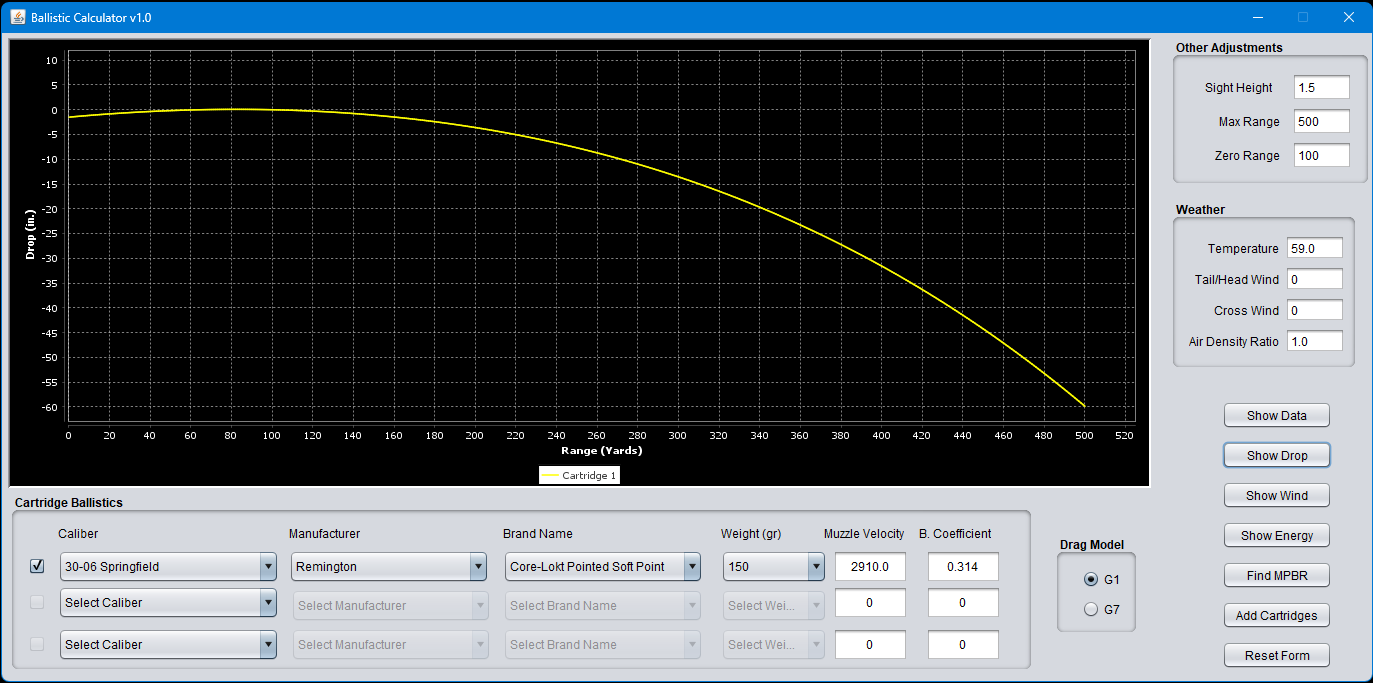 The original desktop version, "Ballistic Calculator v1.0." It still runs, and I use it to cross-check the web engine's output.
Where it goes from here
I build Ballistic Science Lab for people who share the curiosity that started it. The tools and the writing get better when the people using them tell me what is unclear, what is missing, or what they want to understand next. If that is you, the Contact page is open.
If you are new to all of this, start with the articles. If you already know your way around a ballistic chart, the tools are right where you expect them.